Approaching the Holiday Season with Simplicity
Thanksgiving carries plenty of symbolism, tradition, and expectation, but how much stress and expense do we willingly take on because we've been conditioned to believe that's what Thanksgiving should look like? Over the years, I've learned that a traditional Thanksgiving dinner isn't necessary to enjoy time with family. We could have tacos or pizza and still enjoy one another's company. Why would I buy a 16-pound turkey when no one in my family particularly likes turkey?
There's something especially lonely about spending days preparing a meal only to find everyone glued to their phones or watching football, barely acknowledging the effort or the company around them. What should be a time of gratitude and connection can become an exhausting exercise in meeting expectations. And who says all the responsibility for planning, preparing, and cleaning up should fall to one person anyway? This Thanksgiving, I'll be gratefully enjoying a heat-and-eat Shepherd's Pie with my dad. No turkey, no days of cooking, no small fortune spent on sides and desserts, and no mountain of dishes afterward.
I'm not rejecting gratitude, family gatherings, or cherished traditions. I'm simply reconsidering whether those traditions are serving us or whether we've become servants to them. Choosing simplicity isn't necessarily avoiding life or withdrawing from relationships. Sometimes it's exercising discernment about what truly matters and what we have the capacity to carry.
And this may come as a surprise to some, but not everyone looks forward to Thanksgiving or Christmas. A veteran friend once told me he hates Thanksgiving more than any other holiday. While others exchange cheerful greetings and gather around tables, he remembers the 16 friends he lost in combat on Thanksgiving Day in Vietnam. I've never forgotten that conversation.
For him, Thanksgiving isn't a joyful reminder of blessings. It's an anniversary of devastating loss. No amount of turkey, pumpkin pie, or cheerful holiday greetings can erase those memories. For some veterans and military families, the holidays bring reminders of loved ones who never came home, relationships that have changed, or a sense of belonging that disappeared when military service ended. And it's certainly not only veterans who struggle.
For people living with chronic illness, PTSD, complex PTSD (C-PTSD), neurodivergence, grief, or sensory sensitivities, crowded rooms, noise, and social expectations can be exhausting rather than comforting. Even being surrounded by people who love us doesn't necessarily mean we feel connected, understood, or safe. Sometimes there's nothing lonelier than feeling invisible in a crowded room. Or being surrounded by delicious food you can't enjoy because of allergies or food sensitivities.
Maybe it's time to reconsider some of our traditions and stop measuring the success of our holidays by how closely they resemble someone else's expectations. Perhaps Thanksgiving means gathering around a beautifully prepared meal. Perhaps it's sharing pizza with a friend, taking a quiet walk, enjoying a peaceful afternoon at home, or remembering someone we love. Maybe participating for an hour instead of an entire day is enough.
Maybe this year calls for creating a new tradition rather than repeating one that no longer fits. We can appreciate family without attending every gathering. We can honor memories without pretending they don't hurt. We can love people while recognizing that our emotional, physical, and financial resources have limits. And we can extend that same grace to others whose choices differ from ours.
Someone declining an invitation isn't necessarily rejecting us. They may be managing grief, protecting their health, or recognizing what they have the capacity to carry. And sometimes, our own disappointment has more to do with the expectations we've attached to an occasion than with the choices someone else makes.
As a military veteran and former military spouse, I've come to recognize how deeply our experiences, responsibilities, and expectations can shape our identities and decisions. We can become so attached to familiar patterns, learned responses, and the meaning we've assigned to things that we lose sight of what we actually value.
That realization is reflected in two books I've published this month.
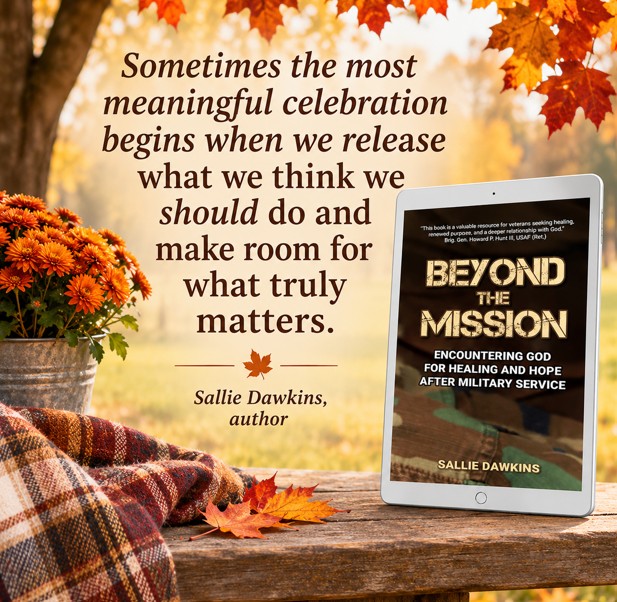
Beyond the Mission: Encountering God for Healing and Hope After Military Service explores the burdens that can remain long after military service ends, including grief, moral injury, shame, betrayal, and the struggle to rediscover our identity and worth beyond what we've done or endured.
Who's Driving the Bus? Learning to Trust the One Who Knows the Way, reaches beyond the military community to anyone who recognizes that past experiences, fear, grief, self-protection, or the need to remain in control may still be influencing present-day reactions and decisions. Through a relatable story, it invites readers to recognize these survival responses, understand why they developed, and gradually learn to trust Jesus with the parts of themselves that have struggled to feel safe.
Both books reflect my belief that God loves us completely and desires to restore us to wholeness. I'm not a counselor, and these books aren't clinical treatment manuals, substitutes for professional care, or promises of instant healing. But as a Christian, I wholeheartedly believe in salvation, supernatural miracles, and God's power to heal. I also believe He meets us with compassion as we learn to trust Him, sometimes through a process that unfolds over time.
If you're a veteran struggling through this holiday season, remember that help is available. Call 988 and press 1 to reach the Veterans Crisis Line, or text 838255. You don't have to be in immediate crisis to reach out. And if you’re not a veteran but you have friends or loved ones who are, check in with them during the holiday season to let them know you’re thinking of them. Showing love, care, and compassion for others fosters healing.
As we approach Thanksgiving and Christmas, perhaps one of the greatest gifts we can offer ourselves and one another is freedom from unnecessary expectations. Freedom to simplify hectic schedules, and acknowledge grief without guilt. Freedom to celebrate differently without judgment when we recognize what truly matters rather than continuing to carry obligations we've never stopped to question. After all, gratitude doesn't require a turkey, and peace isn't measured by how much we accomplish. Sometimes the most meaningful celebration begins when we release what we think we should do and make room for what truly matters.