What If That Dream Was Worth Remembering?
I’m currently working on a book that began with a dream. Actually, it began with the same dream three times in one night. Each time, God asked me the same question. By the third time, I knew I needed to pay attention.
Dreams are not unusual in my writing life. Each chapter of my book When Faith Is Shaken is based on a dream, and 2026 has felt like a year when my dreams have been activated in a new way. Some have helped me process unresolved things from the past, recognize and challenge worldly programming, and make clearer choices toward truth and healing. Even within the past few weeks, I’ve had two dreams I suspect may eventually find their way into future writing projects.
But how do we know when a dream means something? More importantly, how do we discern whether God might be speaking through it? And if He is, how do we faithfully steward what He has given us?
God Has Always Spoken Through Dreams
Dreams are woven throughout Scripture. God spoke to Jacob through dreams (Genesis 28:10–17; 31:10–13). Joseph dreamed about his future and later interpreted the dreams of others (Genesis 37:5–11; 40:5–22; 41:1–32). God warned Abimelech in a dream (Genesis 20:3–7). Solomon encountered God in a dream (1 Kings 3:5–15). Daniel received dreams and visions (Daniel 2:19–23; 7:1–2), and Joseph, the earthly father of Jesus, received divine direction through dreams multiple times (Matthew 1:20–24; 2:13, 19–22).
On the Day of Pentecost, Peter quoted the prophet Joel: “Your sons and your daughters will prophesy. Your young men will see visions. Your old men will dream dreams” (Acts 2:17, WEB).
Dreams are certainly not the only way God communicates with us, but Scripture gives us reason not to automatically dismiss them. At the same time, I don’t assume every dream is a message from God. Dreams may reflect what we have been thinking about, experiencing, fearing, processing—or even eating! That is why discernment matters.
How Do I Know If a Dream Is From God?
I don’t believe there is a foolproof checklist that allows us to stamp "FROM GOD" across a dream. Relationship with God doesn’t work like that. I begin by inviting Him into the interpretation: God, is there something You want to show me through this dream?
Then I pay attention. Was the dream unusually vivid? Did something repeat? Were there strangely specific details? Did it contain a question, warning, instruction, or invitation that remained with me after waking?
Most importantly, I consider whether my interpretation agrees with Scripture and the character of God. God will not contradict His Word. I also consider the fruit. Does the interpretation draw me toward God and toward truth, repentance, forgiveness, freedom, healing, wisdom, or greater love? Or does it produce condemnation, obsession, fear, superiority, or confusion?
Understanding may come immediately, or I may need to write the dream down and wait. Stewardship does not always mean immediate understanding. Sometimes it means honoring what we have received enough to preserve it until understanding comes.
Write It Down Before It Disappears
Dreams can disappear incredibly fast. We can wake convinced we’ll remember every detail, only to discover a short time later that most of it has faded.
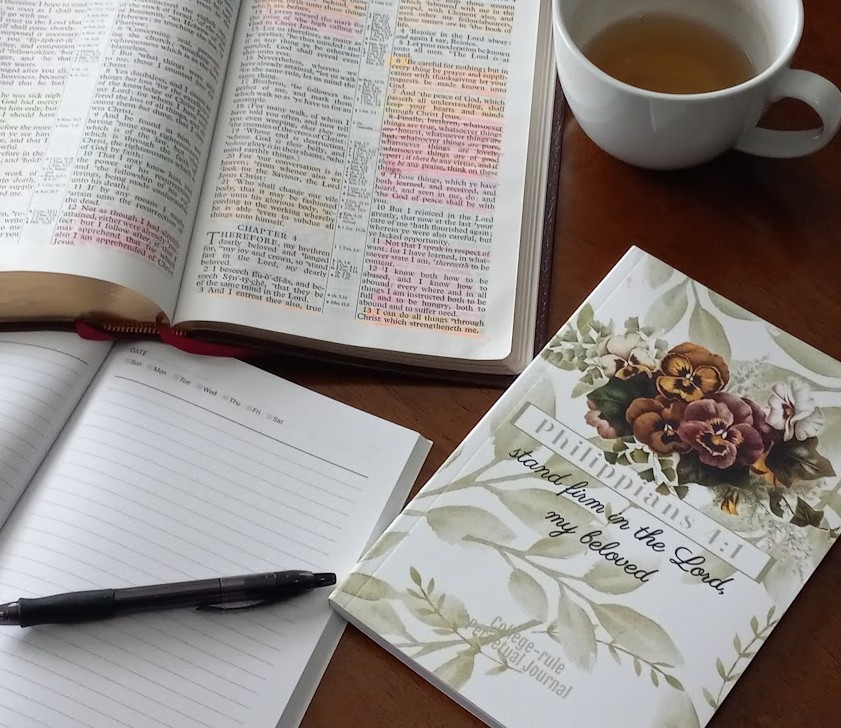
Some people use voice recordings or apps. Since electronics are banned from my bedroom, I keep a notebook and pen beside my bed. When I wake from a significant dream, I scribble down whatever I remember without worrying about grammar, spelling, or whether everything makes sense. I record important people, places, objects, emotions, unusual phrases, questions, and especially anything that repeated. I also date the entry because timing may become significant later.
You may not understand why a dream matters when you first record it. That doesn’t mean it won’t matter later.
Ask God Before Asking Someone Else
After recording a dream, I invite God to help me understand it. I also use resources, including Barbie Breathitt’s Dream Symbology Dictionary, and I’m blessed to have a friend trained in dream interpretation.
Resources can be helpful, but they are still resources. They are not the Holy Spirit.
Dream symbols are not necessarily universal formulas. A house, vehicle, animal, color, number, or person may carry associations for you that are very different from someone else’s. Before searching for someone else’s definition, consider what the symbol meant to you. What emotions did you experience? What is happening in your life? Does it connect with something God has already been showing you? Does Scripture come to mind?
Sometimes interpretation unfolds gradually through conversation with God rather than through a single moment of revelation.
Steward What God Has Given You
Writers often recognize the value of keeping journals, sermon notes, conference notes, and teachings because those collections may eventually become books. Several of my own books began with material I had recorded long before I knew how God would use it. The same may be true of dreams, visions, encounters with God, questions He asks, or conversations with Him that continue returning to your heart.
I’m not suggesting every dream should become a book—or even that every dream is from God. But we can become so accustomed to receiving thoughts, impressions, dreams, and encounters that we fail to steward them. We dismiss what we don’t immediately understand or assume that because something was given personally, it was meant only for us.
Habakkuk records God telling him, “Write the vision, and make it plain on tablets, that he who runs may read it” (Habakkuk 2:2, WEB). While that verse has its own specific biblical context, it reminds me of a simple principle: there is value in recording what God gives us rather than trusting ourselves to remember it later.
One dream may remain a private conversation between you and God. Another may bring healing to something from your past. Another may expose a belief influencing your choices. Still another may eventually encourage or help someone else.
And sometimes a dream may contain a question or lesson that becomes a book. That's what happened to me. Three times in one night, God gave me the same dream and asked me the same question. I didn’t understand everything or know where it would lead, but I knew it was worth remembering, so I wrote it down.
Perhaps that is where stewardship begins—not with understanding everything God has given us, but with valuing it enough to remember.
And if, somewhere along the way, you realize your own journals contain a story God is leading you to share, don’t be intimidated by the publishing process. I wrote The Complete Beginner’s Guide to Self-Publishing for Christians to help new authors understand the practical steps involved.
But first, write down what God gives you. You never know what He may do with it.